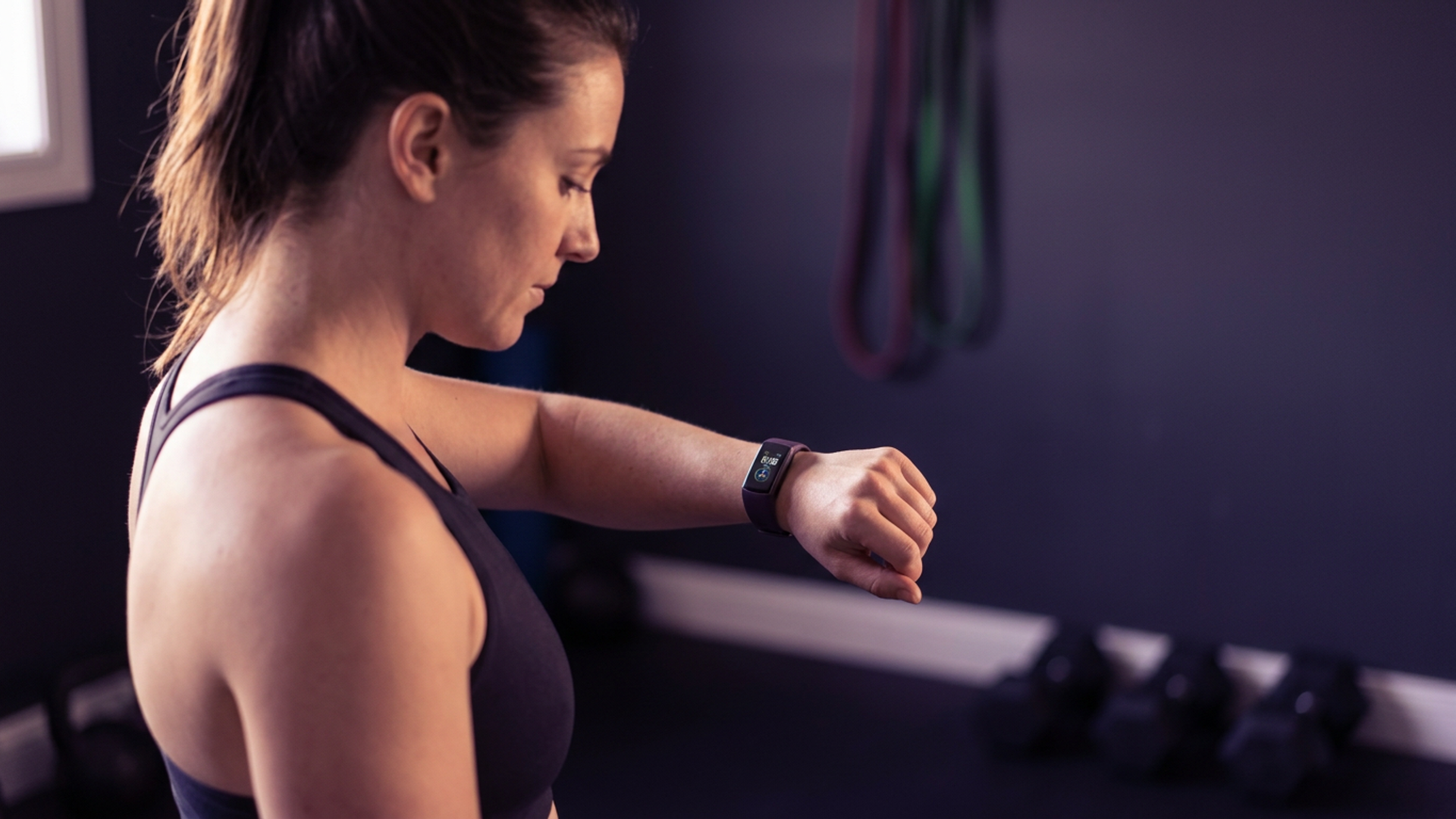
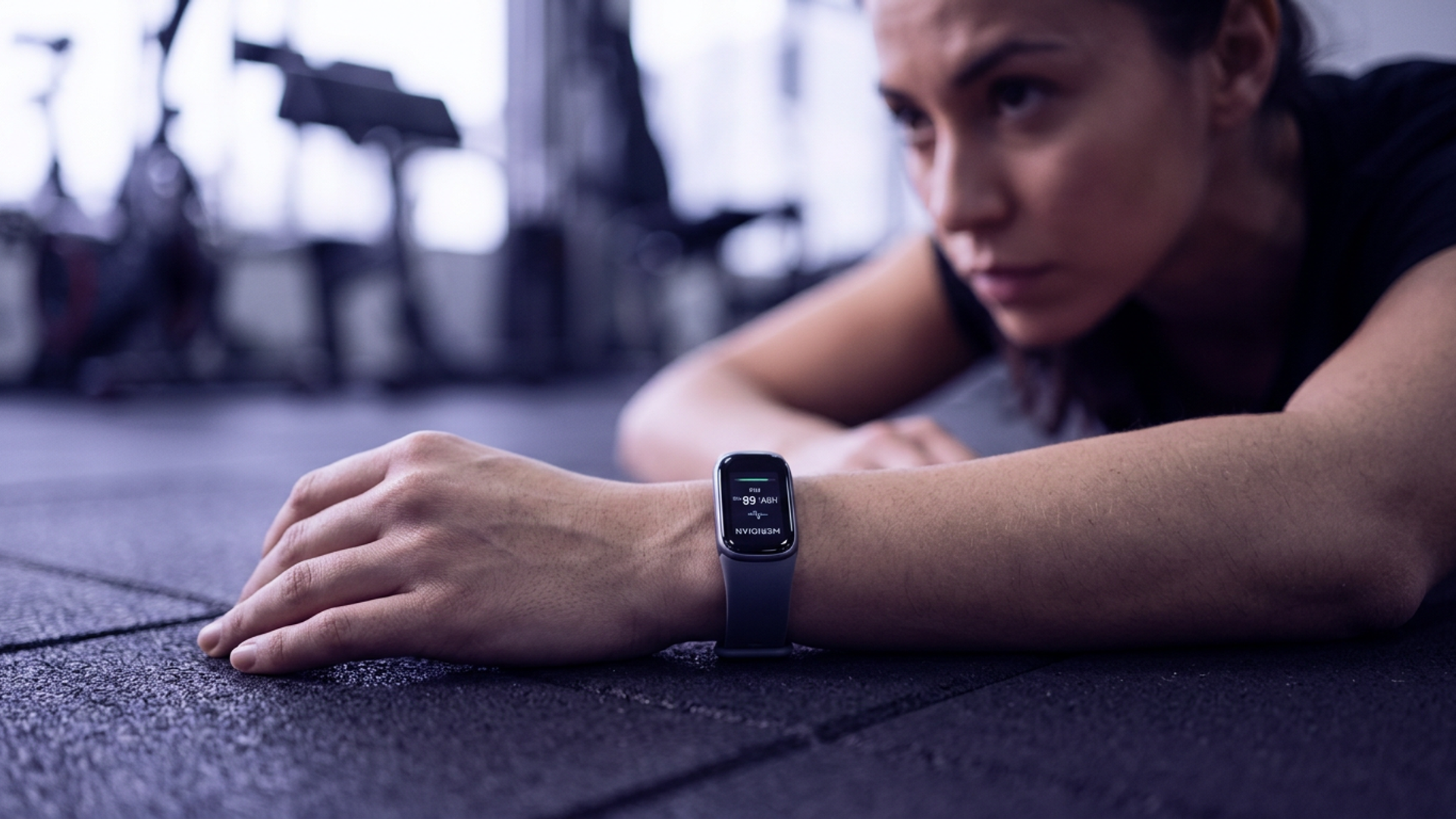
Meridian is the answer if you want a fitness tracker with body composition built in. It measures body fat percentage, muscle mass, visceral fat, and four other metrics from your wrist using bioelectrical impedance analysis (BIA). Oura Ring 4 starts at $349, has no BIA sensor, and does not measure body composition at all. This is the direct comparison.
What BIA actually measures
BIA sends a small, imperceptible electrical current through your body and measures how fast it travels. Muscle conducts electricity faster than fat does. From that resistance reading, the sensor calculates an estimate of body fat percentage, lean muscle mass, visceral fat level, body water percentage, bone density index, metabolic rate, and biological age.
The measurements are best used as trend data, not as clinical readings. Track the numbers week to week and you will see whether a strength training block is adding muscle. Track them month to month and you will see whether a nutrition change is shifting body fat. The value is the direction and the rate of change, not the single number.
Wrist-based BIA is a recognized method used in consumer wellness devices. It works on the same principle as the smart scales you step on at the gym, but it runs continuously on your wrist.
Why body composition data changes what you can see
Weight alone does not tell you what is happening. You can be in a caloric deficit, lifting three times a week, and the number on the scale can sit flat for three weeks while your body fat is dropping and your muscle is increasing. Without body composition data, that period looks like a plateau. With it, you see progress.
Sleep score, resting heart rate, and step count are useful. They tell you about recovery and activity. But they do not tell you whether your body composition is changing. If you want to know whether your training and nutrition are actually working, you need a body composition metric in the same device you already wear.
That is the gap Meridian fills. One device on your wrist shows you the full picture: how you recovered last night, what your heart rate variability trend looks like this month, and whether your muscle mass is moving in the right direction.
What Oura Ring 4 tracks, and what it skips
Oura Ring 4 tracks sleep stages, resting heart rate, HRV, body temperature, blood oxygen (SpO2), activity, and a daily readiness score. It does this well. The ring form factor is comfortable and the sleep data is detailed.
It does not include a BIA sensor. There is no body fat percentage. No muscle mass reading. No visceral fat level. To get that data while using Oura, you need a separate smart scale, a separate weigh-in routine, and a separate app to read it.
Oura Ring 4 costs $349. The Oura Ring 4 Horizon is $499. There is also a monthly membership fee after the initial trial period, currently $5.99 per month.
Meridian Body Edition at $229, no required subscription
The Meridian Body Edition includes the full BIA sensor suite. It costs $229. The Meridian Core is $179 and focuses on HRV, sleep, and activity without the BIA sensor. Both bands include the same sleep tracking, HRV monitoring, SpO2, resting heart rate, and activity data that Oura tracks.
Insights Pro is the optional app subscription, priced at $7.99 per month or $59.99 per year. It adds AI-powered trend interpretation, deeper historical analysis, and personalized coaching. Your raw data is always yours without it. The subscription is genuinely optional, not a gate on your metrics.
There is no required membership. You buy the band, you get your data.
One device instead of two
The practical difference is this: with Oura, you need the ring AND a separate scale to track body composition. You also need to remember to step on the scale consistently and in the same conditions (same time of day, before eating) to get comparable readings. That is a separate habit to build and maintain.
With Meridian Body Edition, the BIA sensor runs in the background throughout the day. You get the data without an extra step. The band is on your wrist anyway.
For health-conscious women who want a complete picture of what their body is doing, the question is whether they want to carry two devices and maintain two habits, or carry one.
The price gap
Meridian Body Edition at $229 versus Oura Ring 4 at $349 is a $120 difference. Add a decent smart scale ($80 to $150 for the brands with app integration and multi-user profiles) and the Oura setup runs $430 to $500 before any subscription. Add two years of the Oura membership and you are at $574 to $644.
The Founders Bundle brings the Meridian Body Edition and Insights Pro together at a lower rate for early-access members. Check the current pricing before it closes.
Frequently asked questions
Is wrist-based BIA as accurate as a smart scale? Both are estimates, not clinical measurements. Wrist-based BIA and scale-based BIA use the same underlying method from different vantage points. For trend tracking over weeks and months, both are reliable when used consistently. Neither replaces a DEXA scan for a clinical reading.
Does Meridian require a subscription to access body composition data? No. Body composition data is included with the band. Insights Pro adds trend analysis and coaching, but the underlying metrics are always available without a subscription.
Can I use Meridian alongside a smart scale? Yes. Some users track wrist BIA daily and use a scale weekly for a second reference point. The two data streams complement each other.
Does Oura Ring measure body fat? No. Oura Ring 4 does not include a BIA sensor. It measures sleep, HRV, heart rate, temperature, SpO2, and activity. Body composition data requires a separate device.
If you want a fitness tracker that covers body composition without a second device, get early access to Meridian. The early-access pricing closes when the first production batch is allocated.